Booking choice: The ABC Natural Pool jeep safari, from $99 per person. Check dates Tour details
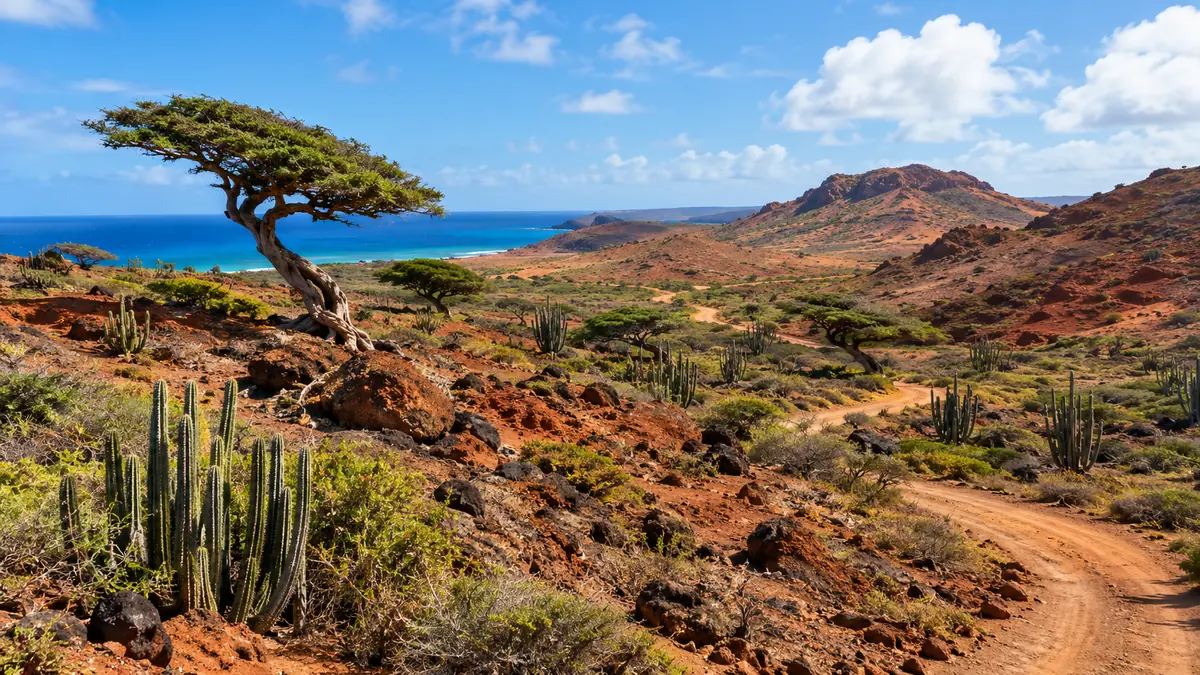
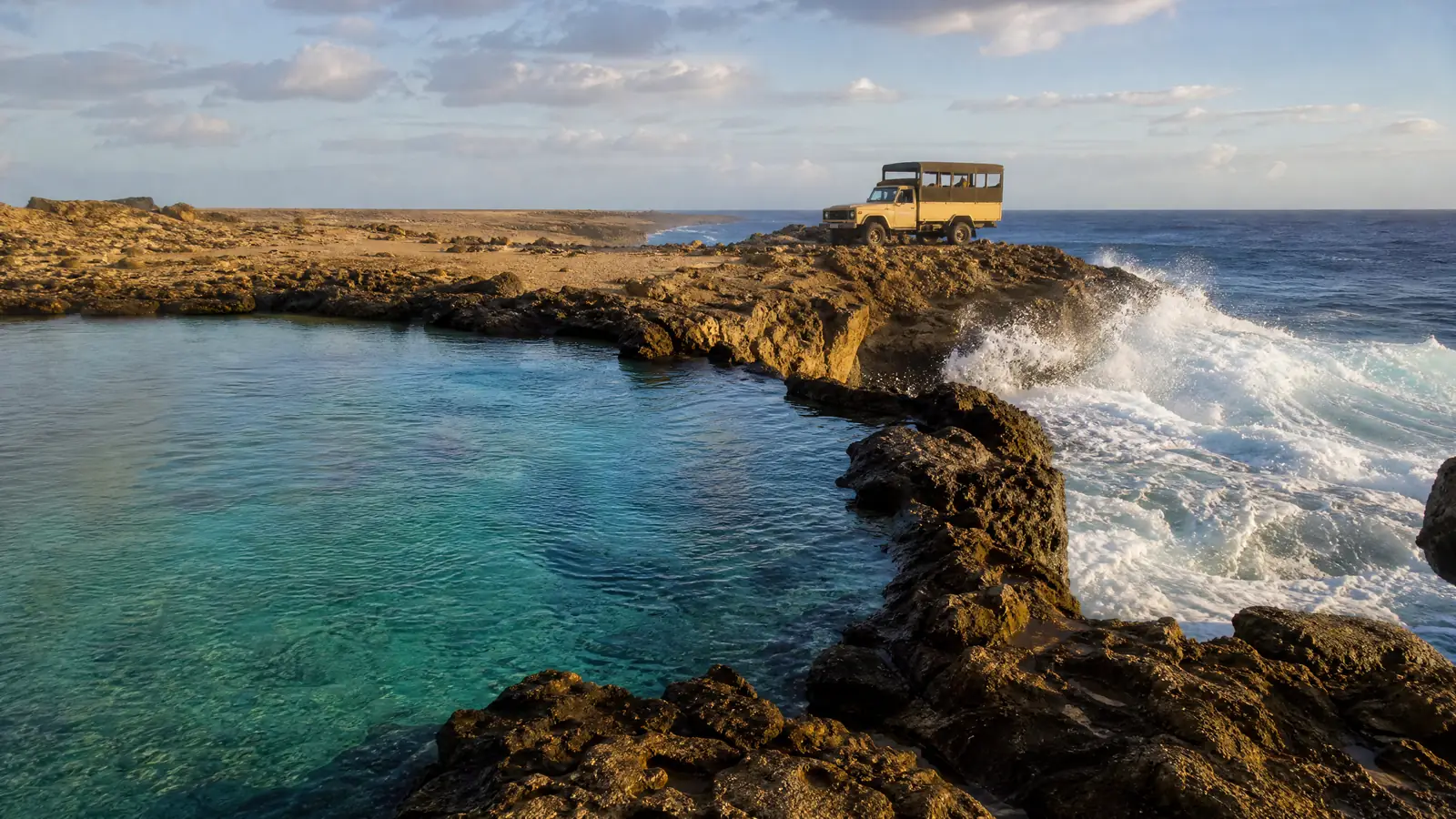
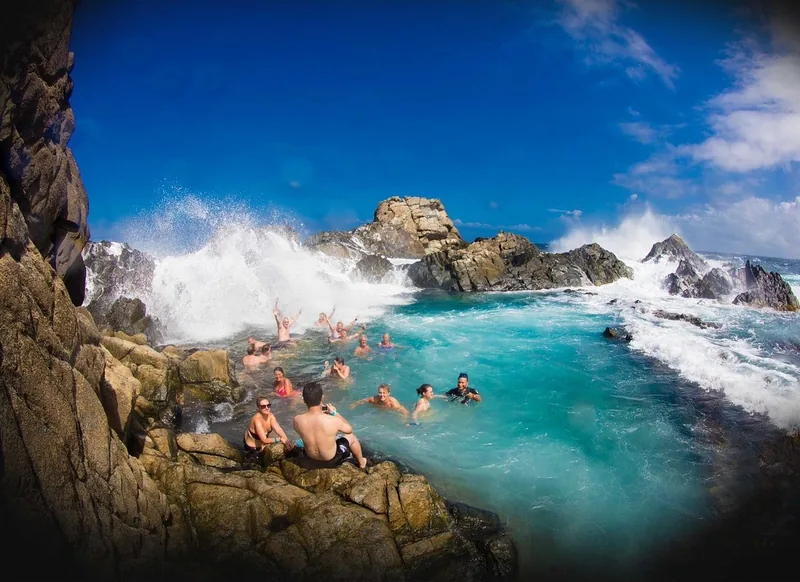
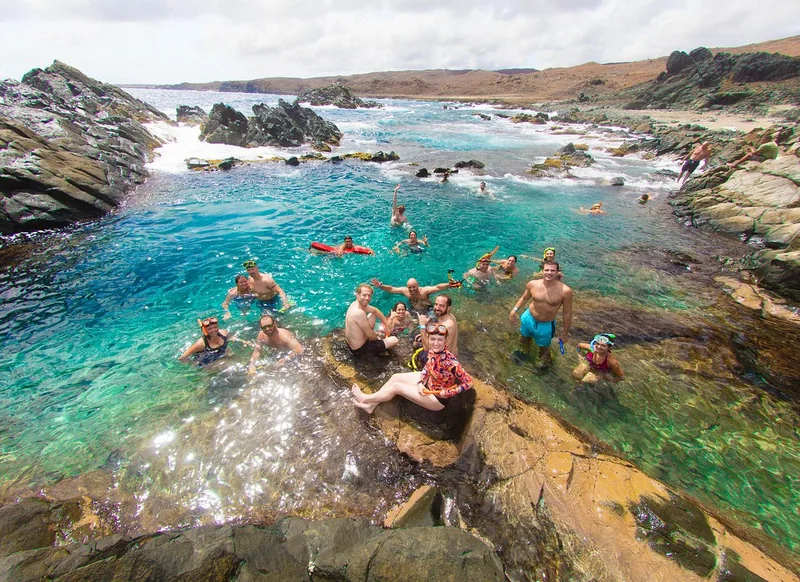
The Natural Pool is a basin of sea water held in by a ring of pillow lava on Aruba's north-east coast, inside Arikok National Park. Locals call it Conchi, and you will also see the name Cura di Tortuga. There is no paved road. You arrive by 4x4, on horseback or on foot, then go down a long stairway and over rocks to the water.
Almost every jeep safari on the island builds its route around it. This guide covers what the brochures skip: the track, the steps, the days the rangers close it, and how long each tour really gives you there.
The quick answer
Only a 4x4, a horse or your own legs reach the Natural Pool: UTVs and ATVs are banned in the park. The last mile is slow, rocky and very bumpy, then about 100 steps lead down. Rangers close the pool for swimming when waves wash over the rim, most often from June to November. December to May and an early start give you the best odds.
Where is the Natural Pool in Aruba, and how do you get there?
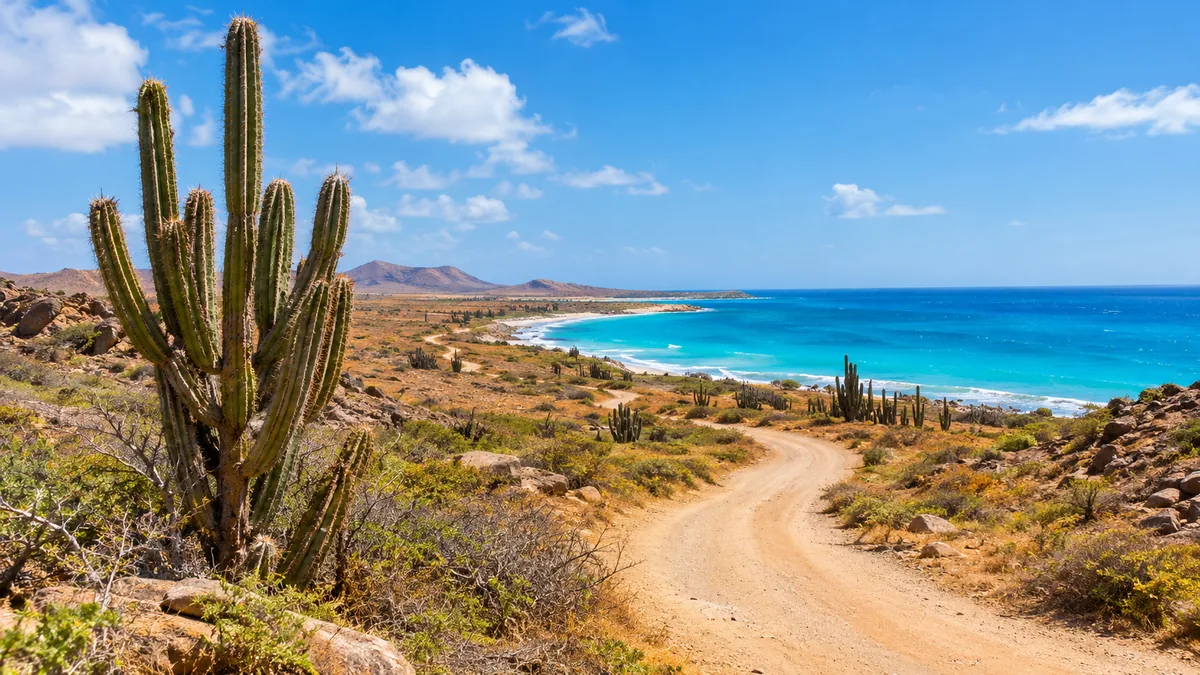
On the wild north-east coast inside Arikok National Park, at the end of about a mile of rough track. A jeep tour, a 4x4 rental, a horse or a hike gets you there.
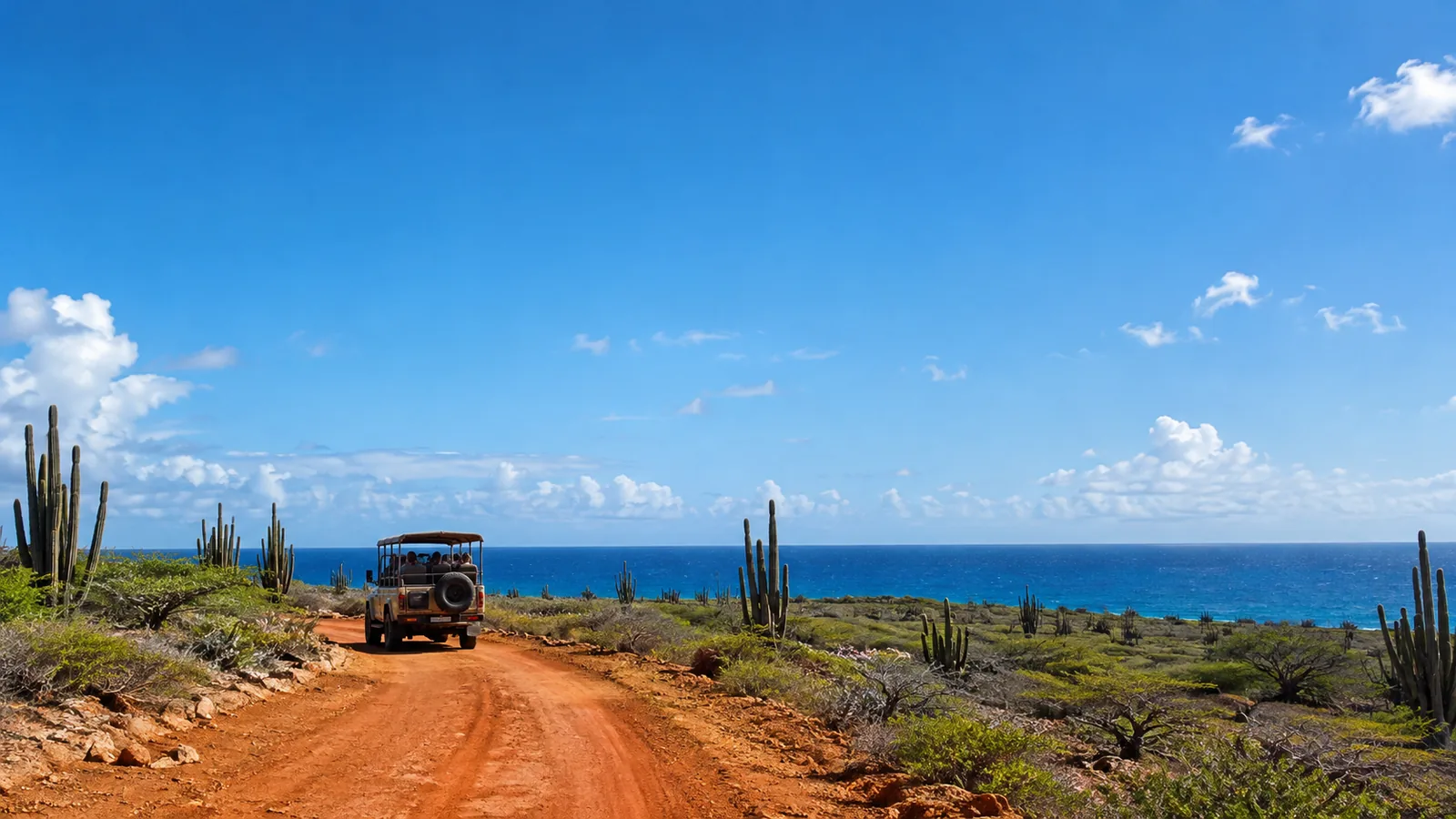
The resorts line the calm west coast. The pool is on the opposite side, where the trade winds hit. Tours cross the island on paved roads, enter the park and then crawl along its tracks. Your options:
- A guided jeep safari: the guide drives, the park fee is often included and snorkel gear is handed out. The easy way.
- A 4x4 rental: you drive and pay $22 per adult at the gate. See renting a jeep or taking a tour.
- On horseback: rides from Rancho Daimari on the north coast head to the pool.
- On foot: from the Daimari trailhead it is about 2.4 miles there and back, roughly an hour, according to Aruba Playbook. From the San Fuego visitor center it is about 4.8 miles, mostly in full sun.
Visit Aruba lists three ways in: 4x4, walk or hike, and tour. A normal rental car is not one of them.
Can you drive to the Natural Pool in a regular car or a UTV?
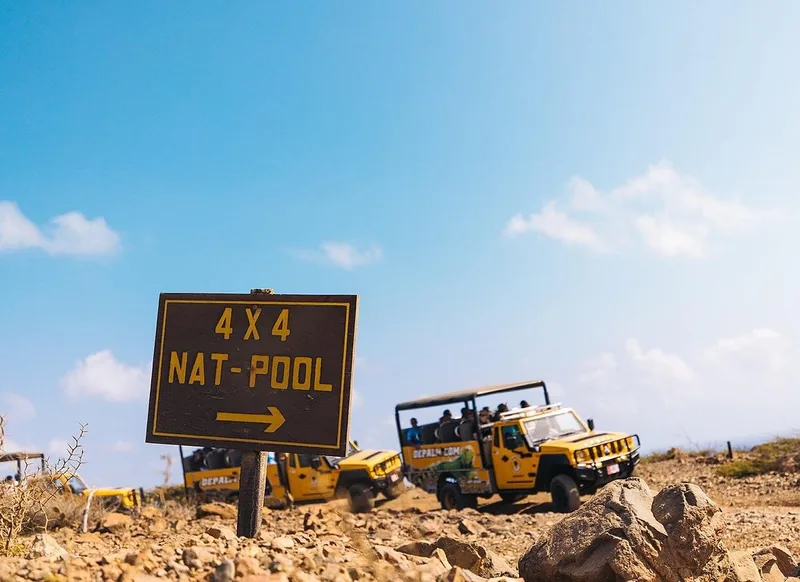
No. A regular car cannot handle the track, and UTVs, ATVs and motorbikes are prohibited inside Arikok.
The ban sits in the park's rules and regulations: all-terrain vehicles, utility task vehicles and motorbikes are not allowed in protected nature areas. UTV tours that advertise the pool park outside the park and move guests into a 4x4 for the last part. The differences are in jeep or UTV.
A 4x4 with good clearance can go in, on marked park roads only and at no more than 20 km/h. Some rental firms ask customers to keep their jeeps off the pool track altogether, so read the contract before you set off.
How rough is the road to the Natural Pool?
Very rough. De Palm calls the last mile each way bumpy enough to need very careful driving, and guests compare it to a roller coaster.
De Palm's own answer on its listing: the off-road section to and from the pool “is bumpy and requires you to drive very carefully. This section is approx. one mile each way.” The rest of Arikok is loose rock and steep hills, driven at walking pace. An ABC guest warned: “Getting there is extremely bumpy, anyone highly prone to motion sickness should be prepared.” On the Arikok safari truck, another counted “60 minutes of really rough terrain.”
Every operator rules out back problems, heart conditions and pregnancy, and De Palm adds kidney problems and recent surgery. Sit near the front if you can. The back bounces most, or as a Fofoti guest put it, “the back row will make you feel like a pin ball”.
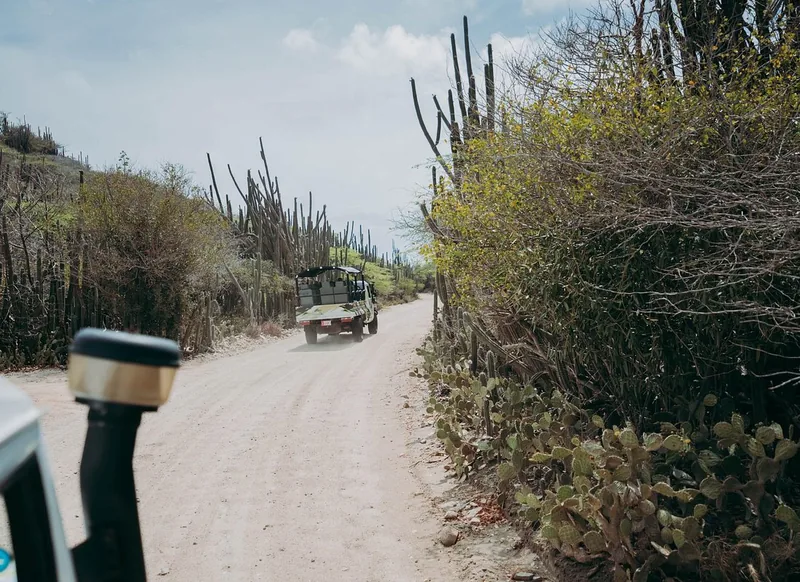
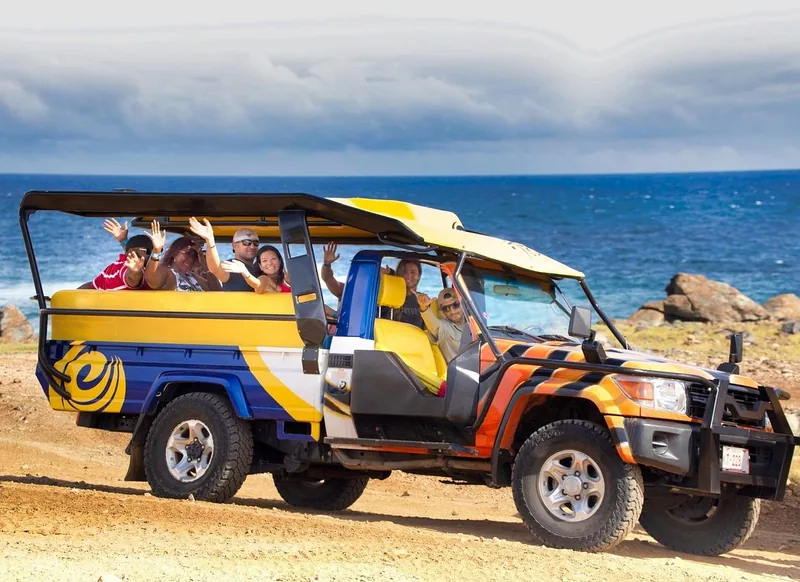
Two hours off-road through Arikok and a full hour at the Natural Pool, the longest stop of any half-day safari.
Explore the ABC Natural Pool jeep safari Tour detailsHow many steps are there down to the Natural Pool?
About 100, down a stairway and then over rocks. A 73-year-old guest counted 93 and called it no big deal.
Aruba Playbook puts it at roughly 100 steps each way. The guest who counted, on the ABC safari, wrote: “There are 93 steps down to the Natural Pool but honestly it’s not that big a deal if you’re in somewhat good shape. I’m 73 and had no problem going down or back up.”
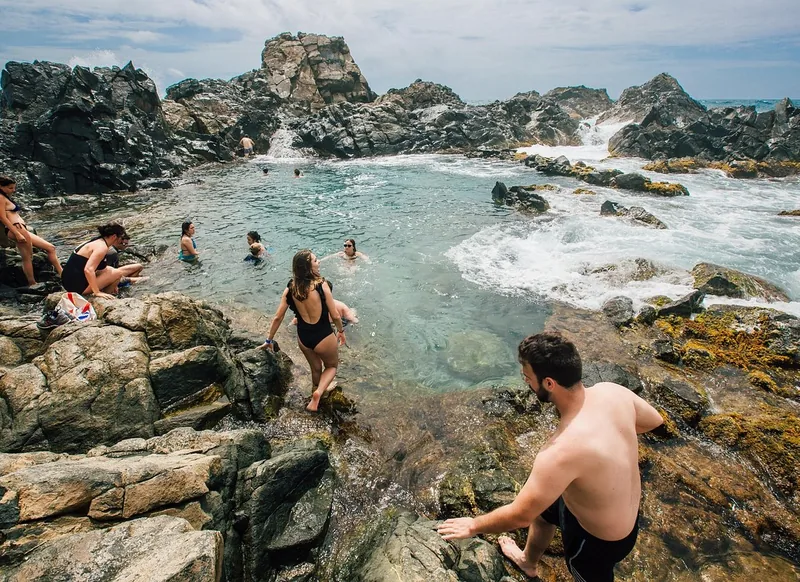
The bottom is the tricky part: wet volcanic rock, sharp in places and slick in others. A Fofoti guest mentioned “scary sliding in the water at natural pool”. Wear water shoes, and see what to wear for the rest. There are no restrooms and no changing rooms at the pool. The nearest toilets are at the San Fuego visitor center.
When is the Natural Pool closed for swimming?
Whenever the rangers judge the waves too high, which happens when the trade winds push surf over the rim. There is no fixed timetable.
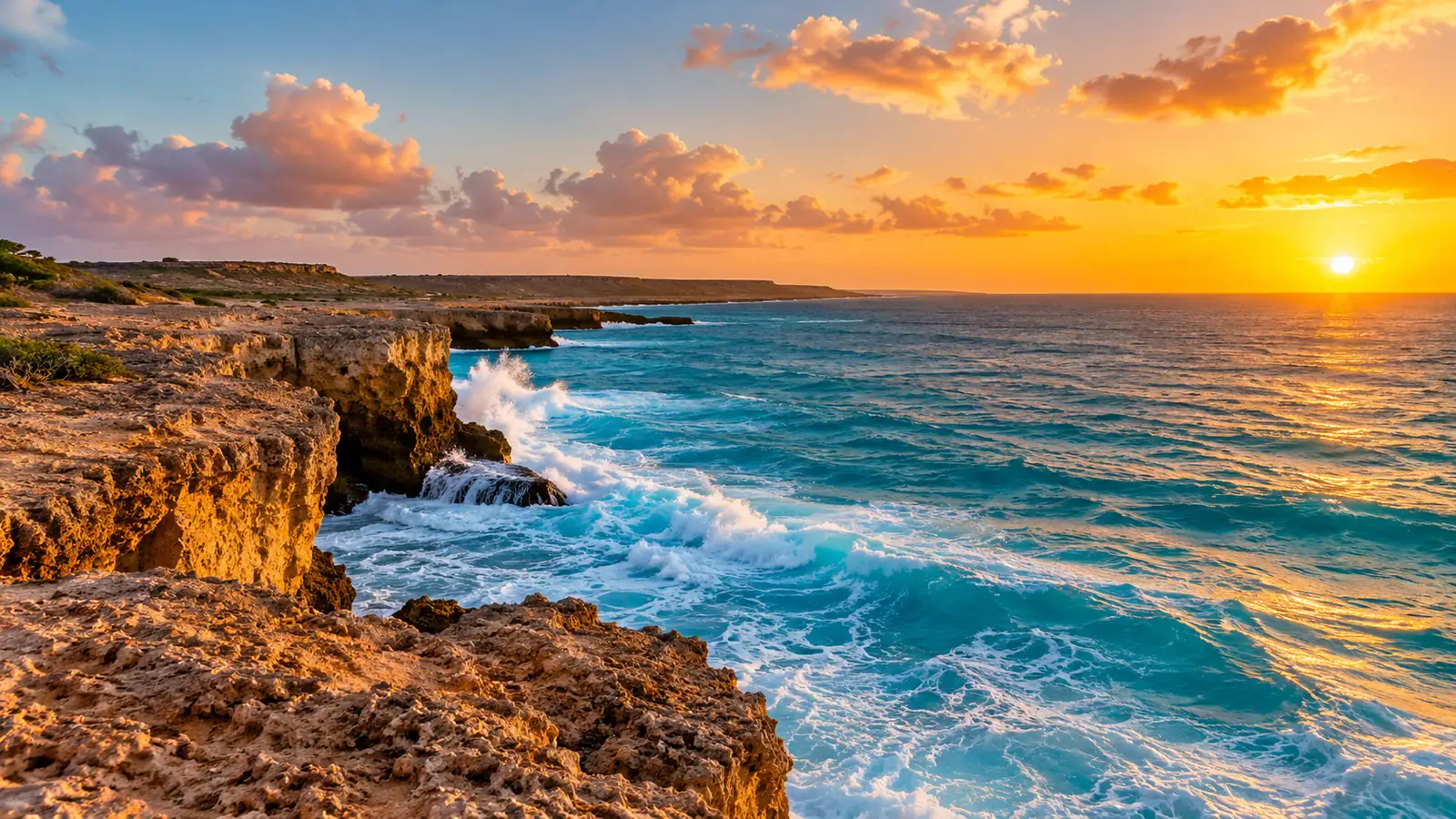
The pool sits right on the windward coast, and the sea comes over the rocks on rough days. Visit Aruba is blunt about it: “It is not recommended to swim in the pool when the waves are too high as it can be dangerous,” and visitors should follow the rangers' advice. The call is made on the day, which is why no tour can promise you a swim.
One Fofoti guest got the bad day: “The natural pool was too rough so we didn’t get to swim in it but it was absolutely beautiful seeing the huge waves hitting the rocks.” The tour still runs on those days. You drive through the park and watch from above. What this season looks like is in the 2026-27 pool conditions post.
A full hour at the pool when it is open, and two hours in Arikok either way.
Check dates for the ABC Natural Pool jeep safariWhat is the best month and time of day to visit the Natural Pool?
December to May for calmer water, and the earliest departure you can get for cooler air and fewer people.
Aruba stays at 27 to 32 °C (80 to 90 °F) all year and sits south of the main hurricane belt, according to Aruba Tourism. The steady trade winds blow from the north-east, straight onto the pool's coast. Aruba Playbook rates December to May as the best months for swimming and June to November as rougher. October to December is also the short rainy season, mostly brief showers.
Time of day decides the crowd. Several guests found the pool busy at midday. A guest on the Arikok safari truck, which picks up at 7:30, wrote that “We got to the natural pool before any of the other tours which gave us some great snorkeling time.” ABC's morning departure meets at 7:45. December to April is also high season, so book those mornings two to three weeks ahead.
How long do jeep tours spend at the Natural Pool?
From 20 minutes to an hour, depending on the tour. ABC gives the most time, the Arikok safari truck the least.
Minutes at the pool, taken from each listing's itinerary. The time includes the climb down and back, so a 20-minute stop leaves room for a short swim and a photo, not much more. On the private tour you set the pace.
| Tour | At the pool | Arikok park fee | From |
|---|---|---|---|
| ABC Natural Pool safari | 60 min | +$25 at check-in | $99 |
| ABC full island day | 60 min | +$25 at check-in | $139 |
| EZ Raider Arikok safari | 45 min | Included | $109 |
| AGW jeep tour | 35 min | Included | $89 |
| De Palm off-road safari | 30 min | Included | $108 |
| Fofoti small group | 30 min | +$20 per person | $78 |
| Outback Safari | 30 min | Included | $122 |
| Arikok safari truck | 20 min | Included | $95 |
Is the Natural Pool safe for swimming and snorkeling?
When it is open, yes, for anyone who can swim: the water inside the rim is calm and full of fish. When waves top the rim, it is not.
On a good day the pool is a sheltered tank of clear sea water, and snorkelers see reef fish close up. One EZ Raider guest went as far as “The snorkeling here is better than snorkeling in Hawaii or Cozumel.” Snorkel gear comes with most tours.
Even on open days the sea can push in. An ABC guest wrote: “the water was rough and my 10 yr old got a little nervous but the tour guides Mark and Josh were excellent at helping us out of the water.” Stay where your guide tells you, keep children within arm's reach, and only jump from the rocks at the spot the guide points out.
Do not mix it up with the cave pool at Bushiribana on the north coast. That one has been closed for swimming since September 2025.
Hotel pickup, a guide at the wheel and snorkel gear, with pool admission included.
Check dates for the De Palm off-road safariFrequently asked questions
Is the Natural Pool in Aruba worth it?
For most people, yes, as long as you accept the ride. Guests call the pool the high point of the day. Skip it if you have a bad back, a heart condition or a pregnancy: every operator rules those out.
Can you hike to the Natural Pool?
Yes. From the Daimari trailhead it is about 2.4 miles there and back, roughly an hour; from the San Fuego visitor center about 4.8 miles. Carry plenty of water, and you still need the $22 park pass.
Do you need a 4x4 to get to the Natural Pool?
Yes, if you drive. Regular cars cannot manage the track, and UTVs, ATVs and motorbikes are banned in Arikok National Park. The other ways in are a guided jeep tour, a horse ride or a hike.
Are there restrooms at the Natural Pool?
No. The nearest are at the San Fuego visitor center. Some tour stops charge for their restrooms, so carry a little cash.
Ready to book
Choose your tour
Free cancellation up to 24 hours before on every option. Prices are from-prices in USD and move with the season.
Natural Pool & Arikok Jeep Safari
- Open-air 4x4 Land Cruiser and a local guide
- Snorkel gear and ice water refills
- Lunch on the morning departure only
EZ Raider Arikok Jeep Safari
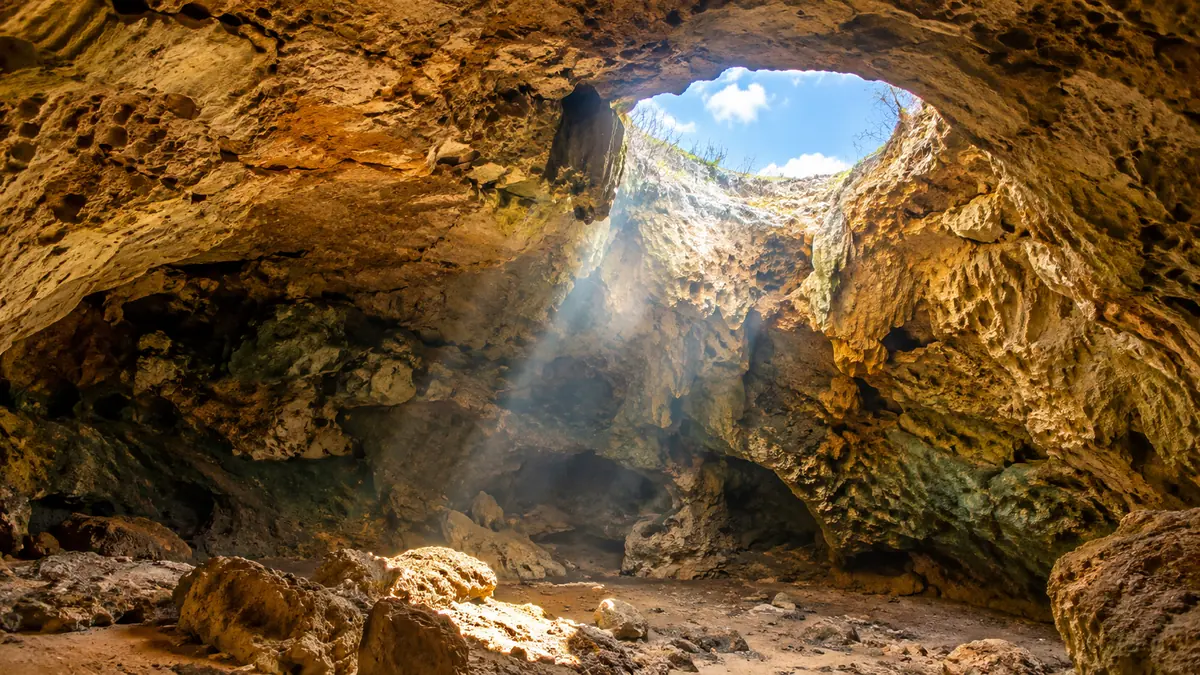
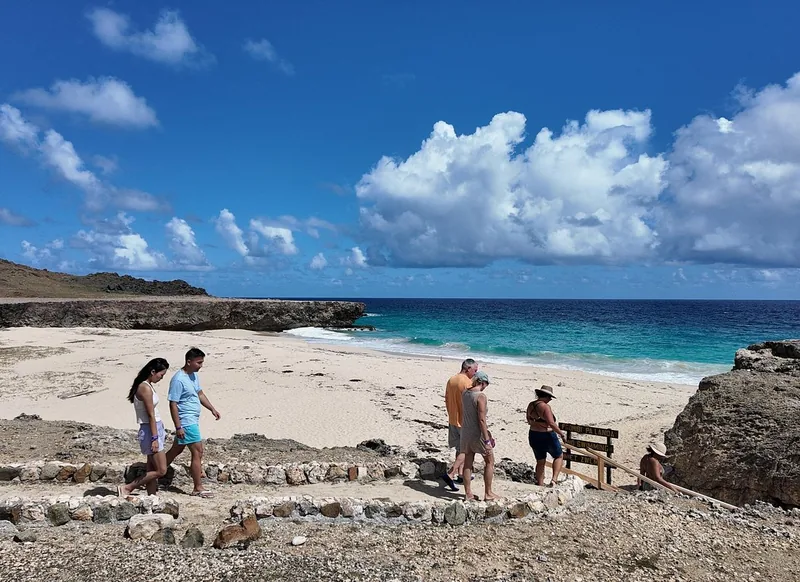
Quadirikiri and Fontein caves plus the pool, park ticket paid. Max 16.
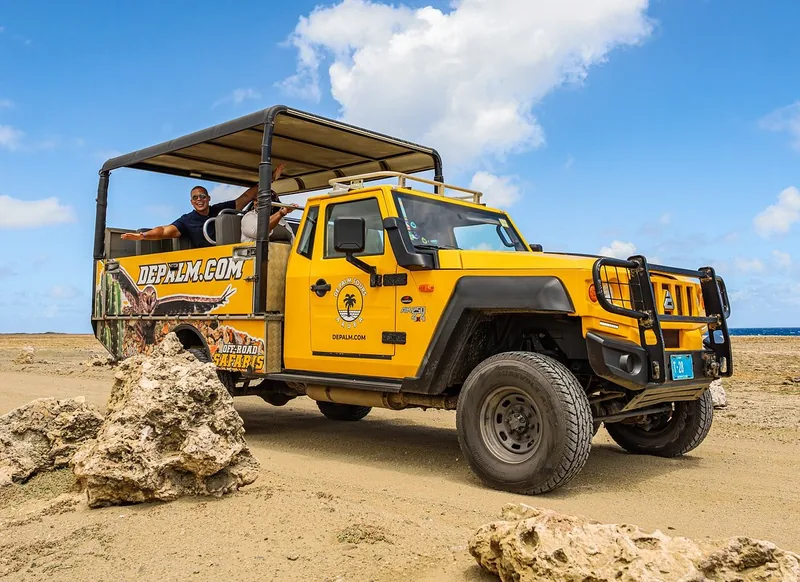
De Palm Off-Road Safari to the Natural Pool
- Hotel pickup and drop-off (hotel guests only)
- Guided off-road drive and snorkel gear
- Water and local taxes